Real counterpart
Every sculpture begins with an elephant observed in the wild, never an anonymous archetype.
Portrait 01 · The resident herd
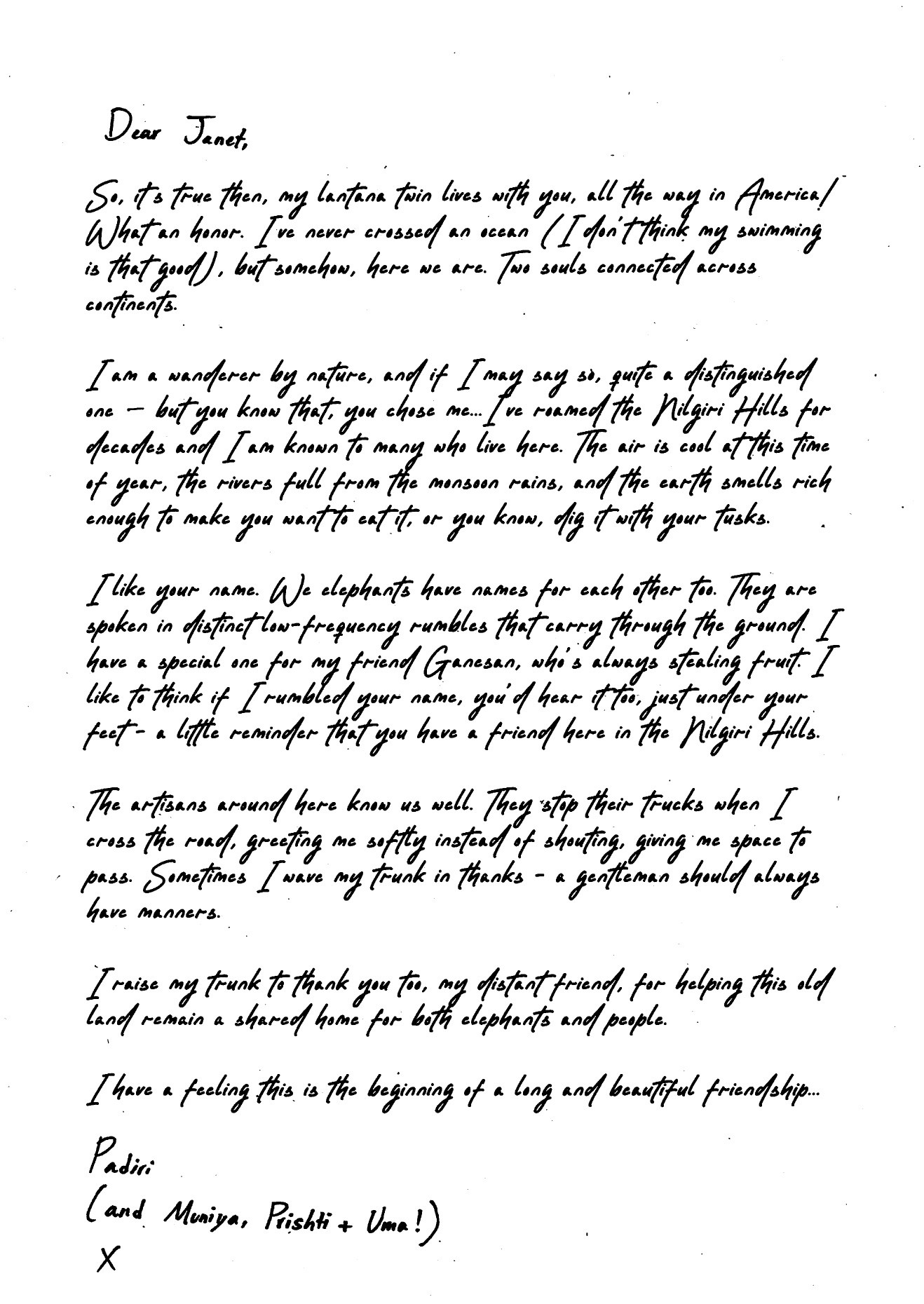
Identity confirmed by certificate and letter
A distinguished wanderer of the Nilgiri Hills, gentle in passage and generous in greeting.
Begin the story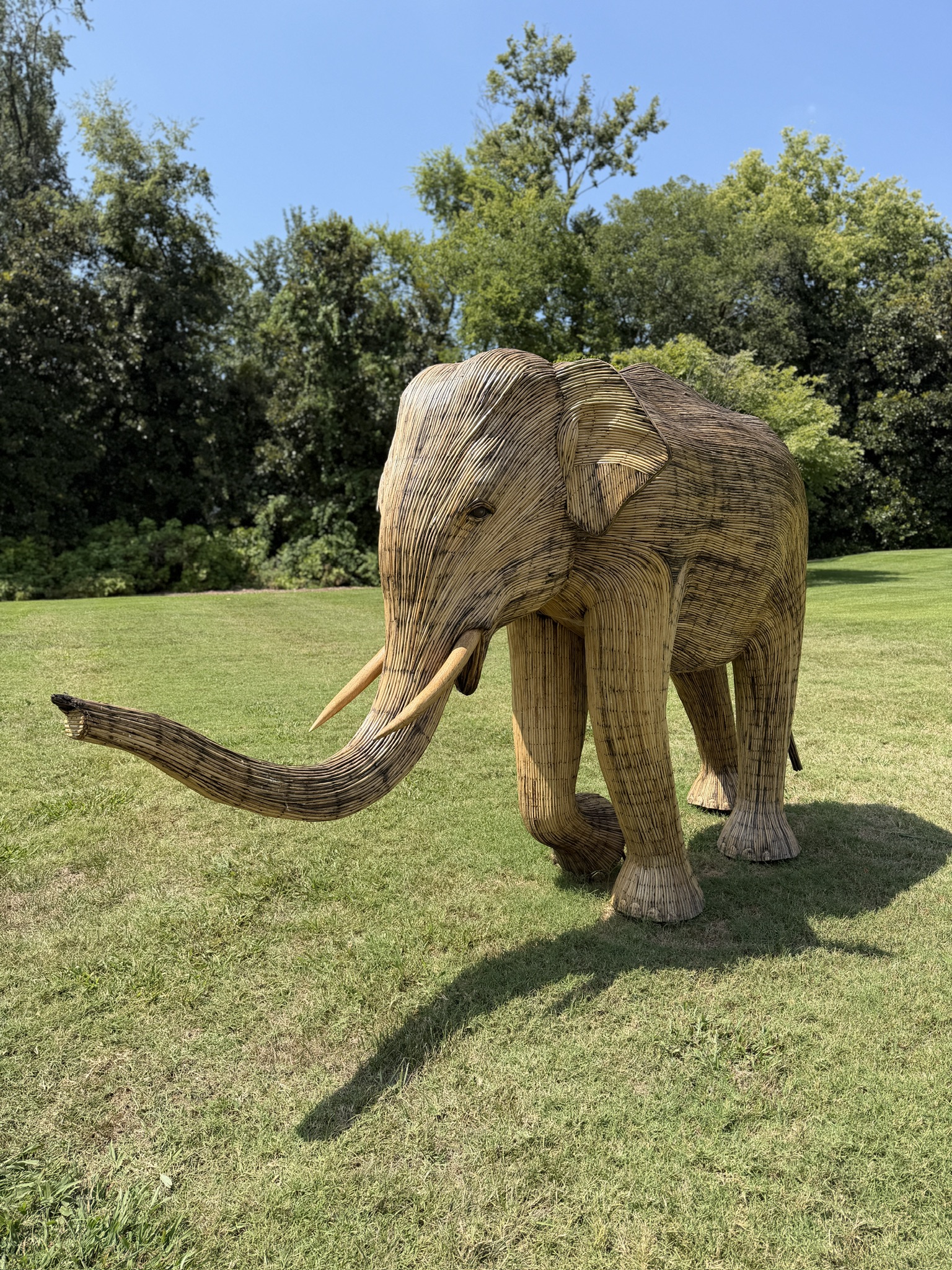
An elephant is a person
Padiri is a real wild elephant, known as an individual in the Nilgiri landscape and translated into sculptural form by the people who share that landscape.
Padiri has roamed the Nilgiri Hills for decades. He describes the cool monsoon air, full rivers, and rich earth as the landscape of a life spent moving freely across shared ground.
He is known to the people who live there. When he crosses a road, artisans stop their trucks and greet him softly, giving him room to pass. Sometimes he lifts his trunk in thanks - “a gentleman should always have manners.”
His friend Ganesan is a notorious fruit thief. Padiri says elephants speak one another’s names in low-frequency rumbles that travel through the ground: a language of friendship felt as much as heard.
Letters from the Nilgiris
“Two souls connected across continents.”
— Padiri, writing to Janet Ayers for the herd
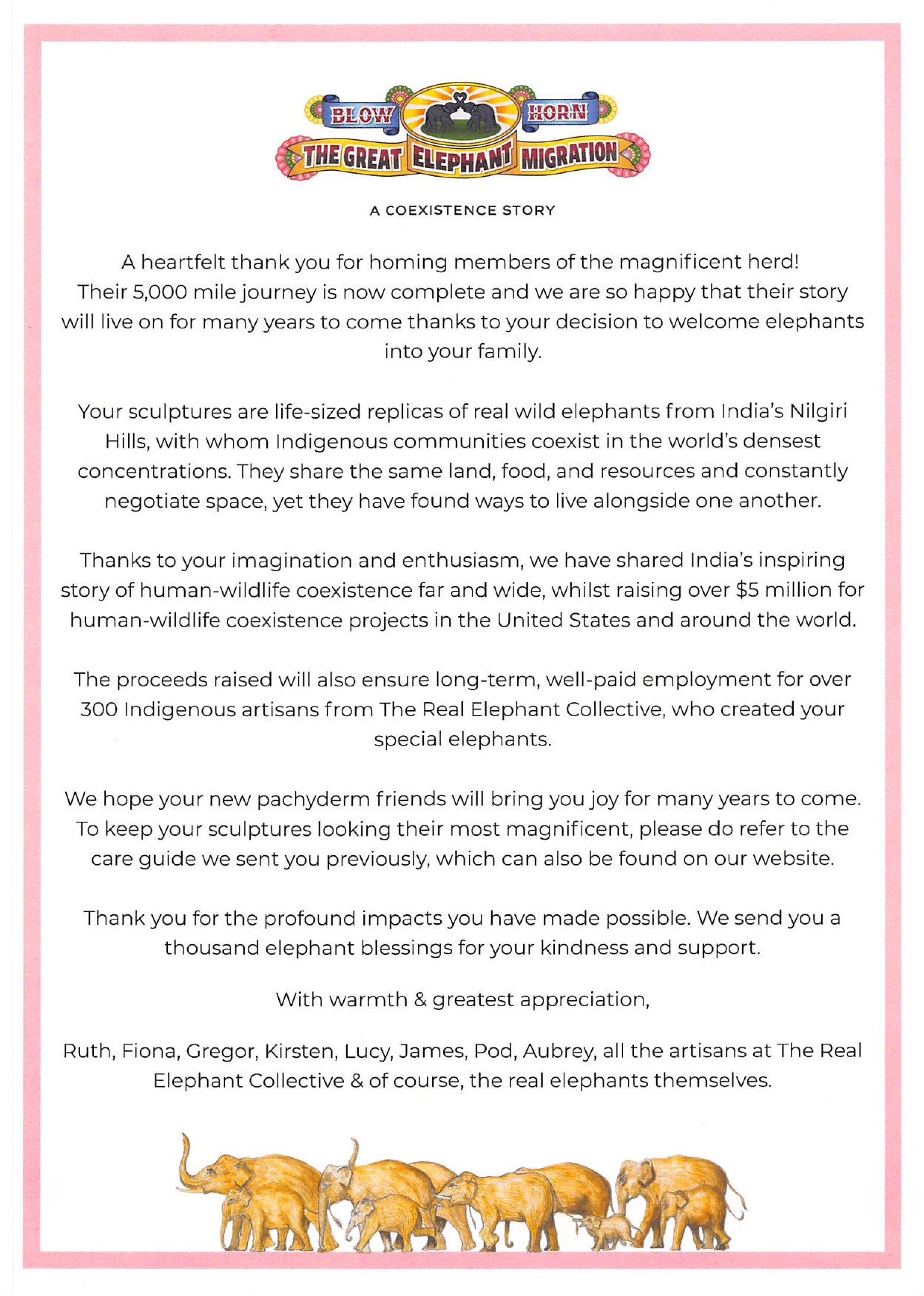
Janet Ayers, who owns and cares for the four sculptures, received a series of letters inviting her to know each elephant as an individual, not an emblem. They also record a 5,000-mile migration that raised more than $5 million for coexistence projects and supports long-term, well-paid work for more than 300 Indigenous artisans.
Selected archival pages are shown here. A page containing a private mailing address has intentionally been omitted.
The archive · portrait 01
This original record pairs the sculpture with Padiri, a real tusker of the Nilgiri Hills, and documents the Adivasi communities and lantana material behind the work.
View the full certificate ↗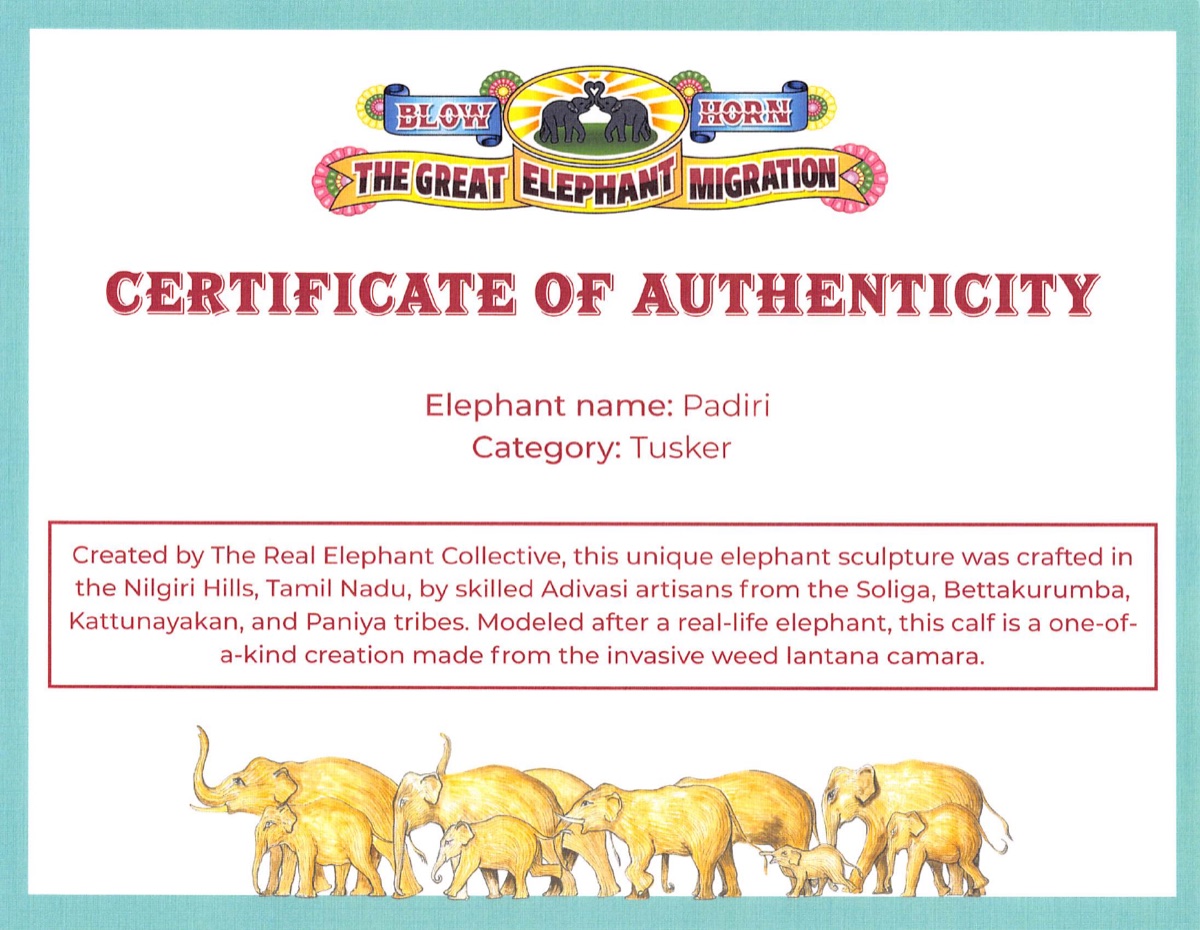 ARCHIVAL REFERENCE · TAP TO ENLARGE
Every sculpture begins with an elephant observed in the wild, never an anonymous archetype.
Soliga, Bettakurumba, Kattunayakan, and Paniya artisans bring lived knowledge of elephants to every form.
Lantana camara is removed from forest habitat and transformed into an intricate, life-size work.
The material
Lantana camara is an invasive plant that can outcompete native vegetation and diminish wildlife habitat. In the hands of the Coexistence Collective, its woody stems become skin, gesture, weight, and memory.
The making supports skilled livelihoods while the removal of lantana helps open space in the forest—a material expression of coexistence rather than a decoration about it.
The invitation
“Humans are not separate from nature, but woven into it.”
The herd asks a practical and generous question: how might we make room for wild lives wherever we are?